
How to Make Bridal Makeup Last All Day in Florida Heat: Complete Guide

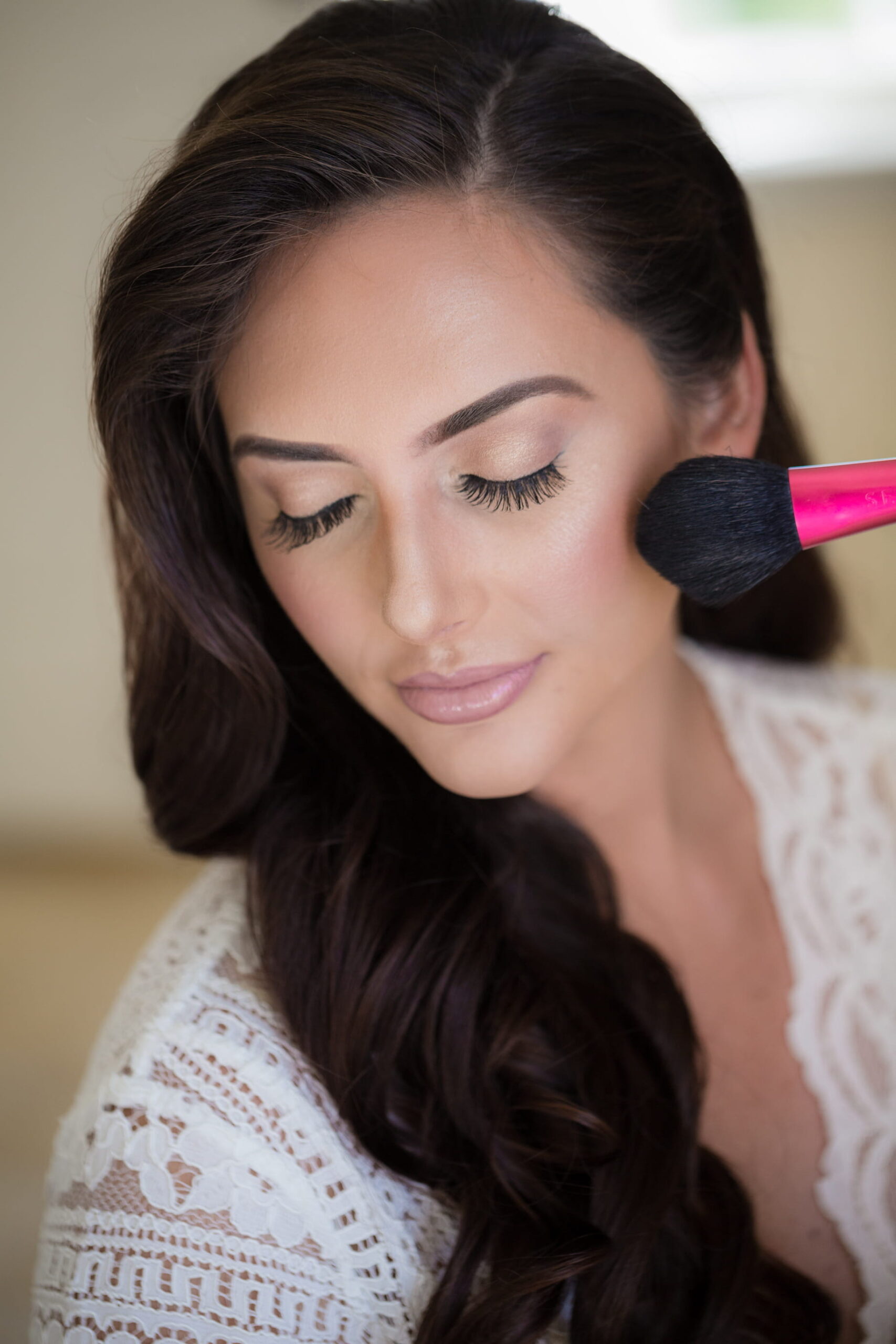
Bridal makeup can last through a hot Florida wedding when the skin is properly prepared, lightweight layers are used, products are set strategically, and touch-ups are planned. Humidity-resistant products and professional application also help prevent makeup from breaking down.
If you’ve ever watched a beautiful full-coverage foundation melt into a shiny, patchy situation somewhere around hour three of a summer event, you already understand the problem. Florida weddings are gorgeous, but they’re not forgiving to makeup that wasn’t built specifically for what this climate throws at you.
The good news is that bridal makeup lasting all day in Florida heat isn’t wishful thinking. It’s an engineering problem, and it has a solution: a specific product stack, applied in a specific sequence, with each layer chosen for what it actually does in high heat and humidity. When you build it right, your makeup holds from the morning of your ceremony through the last dance of your reception.
This guide walks through that system, step by step, so you understand not just what to do but why each step matters.
Why Florida Heat and Humidity Challenge Bridal Makeup
Before getting into solutions, it helps to understand exactly what’s happening when makeup breaks down in heat. It’s not just the temperature, and it’s not just the humidity. It’s what happens when both are working on your skin at the same time.
The Science of Makeup Breakdown in Heat and Moisture
Most foundation formulas are emulsions: water and oil combined with ingredients that hold them together and bond the product to the skin. When heat rises, the components in that emulsion start to separate. When humidity is high, moisture from the air works against the foundation’s grip on the skin. Sweat adds a third layer of moisture from below.
The result is a foundation that starts sliding, sheering out, or separating into oily and powdery zones rather than sitting as one cohesive layer the way it did when it was first applied.
Florida’s summer heat index regularly exceeds 100°F, and humidity sits above 80% through most of the wet season. That combination is significantly more extreme than most US cities, and it’s more extreme than typical “hot weather” warnings on product labels account for.
What Happens to Different Product Types in Humidity
Not every product fails the same way. Traditional liquid foundations with a higher oil content break down the fastest in humidity. Cream products can slide. Powder-only approaches can look cakey in high-humidity conditions because the skin pushes moisture through even a powder layer.
Waterproof formulas are a step in the right direction, but waterproof alone isn’t the same as humidity-resistant. A product can resist water exposure while still being vulnerable to the combination of heat and sweat that a full day outdoors creates.
The real performance comes from silicone-based formulas, which bond to skin differently than water-based or oil-based formulas, and from the layering sequence that creates a system rather than just a single product doing all the work.
Why a “Waterproof” Label Isn’t Always Enough
A product marketed as waterproof was usually tested for resistance to water immersion, not for six hours of South Florida summer conditions. The two are different things. When you’re choosing products for an outdoor ceremony in July, “waterproof” is a good start, but it’s the beginning of the product conversation, not the end.
Skin Preparation: The Foundation of All-Day Wear
The single most overlooked part of making makeup last is what happens before any product is applied. What your skin’s surface looks like when the first product goes on determines how every layer above it performs.
What to Do the Night Before
The night before the wedding, your goal is a clean, balanced, healthy skin surface. Exfoliate gently if that’s part of your routine, but nothing harsh or new. Moisturize if your skin needs it, using your regular products. The key is giving your skin one full night to settle back into its normal equilibrium before the morning.
Avoid introducing anything new the night before: new skincare actives, new serums, anything you haven’t tested. This is not the time to try a hydrating mask a well-meaning bridesmaid brought.
What to Do the Morning of (and What to Avoid)
Morning of, start with a gentle face wash and let your skin settle for 10 to 15 minutes before anything else goes on it. This is the window where your skin returns to its resting state after the temperature change from sleep.
The most important morning-of rule: skip the heavy moisturizer. This is counterintuitive for people with dry skin, but a thick, rich moisturizer applied immediately before makeup gives the primer nothing to grip onto. The moisturizer creates a slippery surface, and everything above it slides. If your skin genuinely needs moisture, use a light, non-oil moisturizer and apply it 20 to 30 minutes before anything else so it has time to absorb fully.
Why Heavy Moisturizers and Oil-Based SPF Work Against You
Oil-based sunscreens are another common problem. Many modern SPF products have a dimethicone or emollient base that feels luxurious and photographs beautifully under normal conditions, but creates a slick surface that reduces foundation grip significantly. For your wedding day, choose a lightweight, non-oil SPF if you’re going to apply one, and apply it at least 30 minutes before makeup.
For oily skin types, skipping moisturizer entirely the morning of is often the right call. The humidity is already providing ambient moisture. Your skin doesn’t need more.
The Role of a Clean, Balanced Skin Surface
A dry, clean, balanced skin surface is what primer needs to do its job properly. Think of the skin as the substrate for everything above it. The cleaner and more neutral that substrate, the better every subsequent layer performs.
Choosing the Right Primer for Humidity Resistance
Primer is where the heat and humidity resistance actually begins. This is the most important product decision you’ll make in the entire stack.
Silicone-Based Primers: How They Create a Barrier
Silicone-based primers create a thin, flexible barrier between your skin and the foundation. This barrier does two things: it fills in surface texture and pores (which creates the seamless base that makes foundation look skin-like) and it gives the foundation a surface to bond to that resists moisture.
Because silicone doesn’t mix with water, a silicone-based primer creates a layer that humidity can’t easily penetrate the way it can with a water-based or light-gel primer. When the foundation goes on top of the silicone primer, it bonds to that layer rather than directly to the skin, and that bonding is significantly more stable in warm, humid conditions.
Mattifying Primers vs. Hydrating Primers in a Hot Climate
For an outdoor Florida wedding, a mattifying or pore-minimizing primer is almost always the right call over a hydrating primer. Hydrating primers add moisture to the skin’s surface, which is the last thing you need in a climate that’s already providing excess moisture from the air.
Mattifying formulas typically contain absorbing ingredients like kaolin clay or silica that manage oil production at the surface while the silicone base creates the grip needed for the foundation layer above.
Grip-Enhancing Formulas and Why They Extend Foundation Wear
Some primers are specifically formulated with grip-enhancing properties, designed to extend the adhesion between primer and foundation by providing a surface texture that mechanically holds the foundation in place as well as chemically bonding to it.
In high heat and humidity, this mechanical grip becomes particularly important because the chemical bonding is being challenged by the environmental conditions. A primer with good grip performance is significantly more likely to hold through a full outdoor day than a lightweight “hydrating” formula.
Applying Primer Correctly for Maximum Effect
Application matters as much as product selection. A thin, even layer of primer applied with a fingertip or a sponge gives the most even coverage and the best grip. Heavy primer application doesn’t increase the benefit and can lead to product pilling when the foundation is applied on top.
Apply primer to the full face, allow 2 to 3 minutes for it to set before applying foundation, and don’t rush this step. The setting time is what allows the silicone to form its barrier properly.
Foundation Selection and Application for Long Wear
Once the primer is set, the foundation choice is the second most important decision in the stack.
Long-Wear and Transfer-Proof Liquid Formulas
Long-wear liquid foundations are specifically formulated to resist the breakdown that standard foundation experiences under extended wear conditions. They typically use polymers that set to a film on the skin rather than staying in an emulsion state, which makes them significantly more resistant to heat, humidity, and contact.
Transfer-proof formulas take this a step further, using film-forming ingredients that resist transfer to skin, fabric, and other contact. For a wedding day full of hugs, kisses, and dancing, transfer resistance is a practical benefit beyond just the longevity concern.
Why Airbrush Foundation Performs Well in Heat
Silicone-based airbrush foundation is particularly well-suited to outdoor warm-weather conditions. The formula bonds to skin in thin, even layers that resist moisture breakdown more effectively than most liquid foundations because of the way the silicone layers dry and set.
For oily or combination skin brides having outdoor summer ceremonies, airbrush foundation or a hybrid approach (airbrush for the base, traditional products for dimension and color) often outperforms traditional liquid application in terms of hours of clean hold.
For a full comparison of airbrush versus traditional application, the airbrush vs traditional bridal makeup guide covers every dimension of that decision.
What to Avoid: Products That Break Down Fast in Humidity
Dewy or luminous finish foundations are typically not the right choice for outdoor summer weddings. The ingredients that create that glow effect often include oils and light-reflecting particles that look extraordinary in controlled lighting but amplify shine in heat and photograph inconsistently in bright outdoor sun.
The same applies to any foundation with a high oil content or a very emollient base. These feel beautiful in a cool salon environment and often get positive reviews for dry skin, but they’re not built for Florida outdoor conditions.
Application Technique That Extends Wear Time
Foundation technique affects longevity as much as formula. Thin layers built up to coverage outperform one thick application every time, especially in warm conditions. A single heavy layer sits on the skin’s surface as a thicker film that heat can penetrate more easily. Multiple thin layers each have more direct contact with the skin or the layer below, creating a more stable structure.
Apply in sections: center of the face first, then out toward the edges. Blend edges carefully, and let each section settle slightly before moving on. Your artist will handle this as part of their process, but understanding it helps explain why professional application holds so much longer than self-application.
Powder, Setting, and Baking: Getting It Right in the Heat
Setting powder is essential in a humid climate, but it’s also one of the most misapplied products in the bridal beauty process.
Where to Apply Setting Powder and Where to Skip It
The T-zone: yes. Center of the face, the bridge of the nose, the chin: yes. The cheeks if they’re prone to shine: yes. Under the eyes on brides with dry skin or mature skin: no, or use the absolute minimum. Heavy powder in the under-eye area creates a textured, creased appearance within a few hours that no amount of touch-up recovers easily.
The goal of powder in a humid climate is to create a barrier that oil production has to work through before it reaches the surface. Strategic placement creates this barrier without over-drying the areas of the face where it’s counterproductive.
The Baking Technique: Does It Actually Help in Humidity?
Baking involves applying a thick layer of powder to an area (typically under the eyes and the T-zone), allowing it to sit for 5 to 10 minutes while the heat from the skin sets the foundation beneath it, then dusting off the excess. In a controlled environment, baking creates a very smooth, set look that holds well through the day.
In high humidity, baking can be effective when the product is correct (a finely milled translucent powder, not a heavy setting powder) and when the under-eye area is handled with care. An experienced artist who regularly works in warm conditions will know exactly how to use this technique well and when to avoid it.
Loose vs. Pressed Powder Performance in Heat
Finely milled loose powder sets more smoothly and breathes more naturally than compact pressed powder, which tends to be more densely packed and can create a heavier appearance in heat and humidity. For wedding day use, a quality loose translucent powder applied with a large, fluffy brush is usually the better performing choice.
Setting Spray: The Most Important Step in the Sequence
If there’s one step that brides who skip it most often regret, it’s the setting spray. This is not an optional finishing touch. In a hot, humid climate, it’s a structural component of the makeup system.
How Setting Spray Works and What to Look for in a Formula
Setting spray creates a flexible film over the completed makeup that slows the breakdown process caused by heat, humidity, and contact. The best formulas for warm, humid conditions contain film-forming agents that resist moisture penetration and lock the layers below them in place.
Look for formulas marketed specifically for longevity or humidity resistance rather than “dewy finish” or “refreshing mist” sprays, which are different products designed for different purposes. Grip-focused setting sprays typically have different textural properties and perform very differently in real conditions.
The Correct Application Method (Distance, Pattern, Wait Time)
Hold the setting spray 10 to 12 inches from the face. Apply in a figure-eight pattern across the full face rather than spritzing randomly. Allow the first application to dry fully, which takes 30 to 60 seconds, before applying a second pass.
Do not rub or blot immediately after application. The film needs time to set and form its barrier. Touching the face right after spraying disrupts that formation.
Layering Setting Spray Within the Makeup Process vs. Only at the End
Advanced technique: your artist may apply setting spray once mid-process (after the foundation and concealer layer are set, before adding blush and eye products) and again at the very end. This mid-application layer seals the base before additional products are layered on top of it.
This double-application technique is particularly effective in outdoor summer conditions because it means both the base and the finished look have their own protective layer, rather than relying on one final application to protect everything.
Which Types of Setting Spray Perform Best in Florida Conditions
For outdoor warm-weather weddings, prioritize setting sprays with: high alcohol content as a first or second ingredient (this is what creates the rapid-setting film, not a concern for skin dryness when used correctly), film-forming polymers in the formula, and a manufacturer description that specifically addresses longevity or humidity resistance.
Waterproof and Long-Wear Products for Eyes and Lips
The base is the most critical system, but the eye and lip products matter enormously for the overall look holding together through the day.
Waterproof Mascara: Why It’s Non-Negotiable at an Outdoor Wedding
Standard mascara is not designed to resist the combination of heat, humidity, perspiration, and the very real possibility of tears during the ceremony. Waterproof mascara is, and the visual difference between waterproof and non-waterproof mascara after three hours of an outdoor summer wedding is significant.
For most brides, waterproof mascara on the wedding day is simply non-negotiable. If you’re concerned about removal at the end of the night, an oil-based makeup remover breaks down waterproof mascara easily. That consideration shouldn’t outweigh wearing something that will hold through a full day.
Waterproof Liner vs. Standard Liner in Humidity
Standard eyeliner migrates in heat and humidity. The line that looked clean and sharp at 9am will have softened, smudged, or transferred to the lower lid by noon at an outdoor ceremony. Waterproof liner, or a liner formula designed to set to a smudge-proof finish, is the correct choice for any outdoor warm-weather event.
Long-Wear Eyeshadow and the Importance of a Good Primer
Eye primer (separate from face primer) creates the same kind of grip for eyeshadow that face primer creates for foundation. Without it, eyeshadow creases into the lid crease with heat, oils, and movement. With it, the shadow holds in place for the full day.
This is one of the steps that separates professional bridal makeup from home application. A good eye primer, properly applied, extends eye makeup wear so significantly that the difference at hour six is remarkable.
Lip Products That Stay Through Eating, Drinking, and a Long Day
Long-wear liquid lipsticks and stain-based formulas hold through eating and drinking far better than traditional cream lipsticks or gloss. The tradeoff is that they can feel drying on the lips over a long wear period, so they work best when applied to moisturized lips and when a touch of gloss is available for refreshing the sheen without reapplying the underlying color.
For brides who prefer a glossy lip on the day, a lip liner applied first (fully lining and filling in the lip, not just the edge) extends the base color significantly and gives the gloss something more stable to sit on top of.
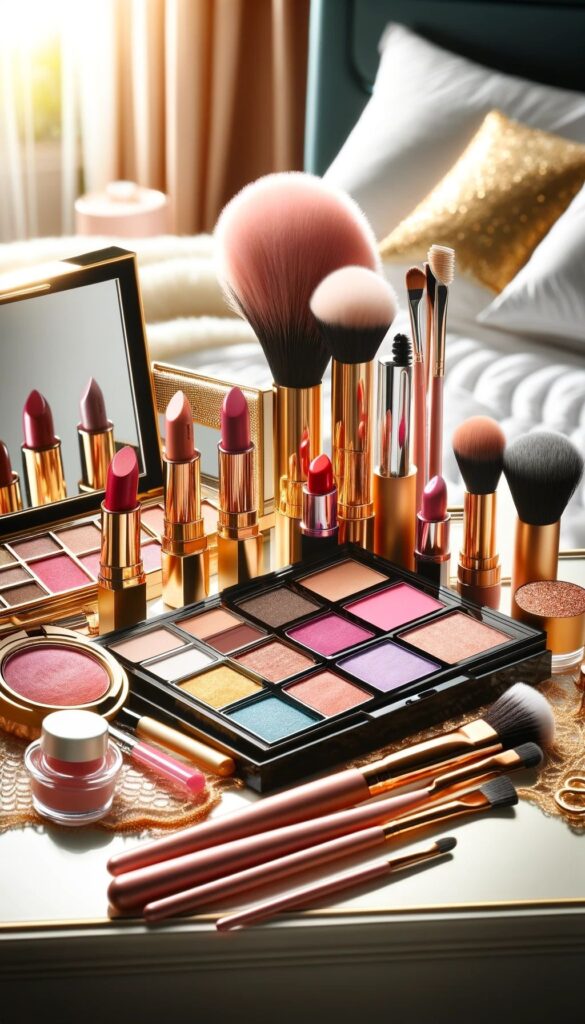
Managing Oil and Shine Without Disturbing the Makeup
Even the best makeup stack will produce some natural shine during a full day. The way you manage that shine matters as much as preventing it.
Oil-Blotting Sheets: When and How to Use Them
Oil-blotting sheets absorb excess sebum from the skin’s surface without disturbing the makeup layer sitting on top. This is the correct first step in any touch-up situation: blot first, then assess what the skin actually looks like, then decide what else if anything needs to be added.
Blotting before adding any powder prevents the layering problem where powder goes on top of oil, creating a cakey buildup that looks worse than the shine did.
Blotting Powder for Touch-Ups vs. Reapplying Foundation
After blotting, if there’s still visible shine that needs addressing, a light press of a blotting powder (a powder specifically formulated for touch-up use over existing makeup) is the right tool. This is different from a setting powder and is designed to be applied over makeup that’s been worn for hours without creating the heavy, over-layered appearance that foundation reapplication creates.
Reapplying liquid or cream foundation over makeup that’s been worn for hours almost never looks good, and professional photographers can spot it immediately in images. Avoid it.
What Not to Touch (and Why)
Areas of the face that still look good should not be touched. The impulse to “refresh” everything is understandable but counterproductive. Adding product to areas that haven’t broken down creates inconsistency and can disrupt the setting that’s been working correctly. Touch up only what actually needs attention.
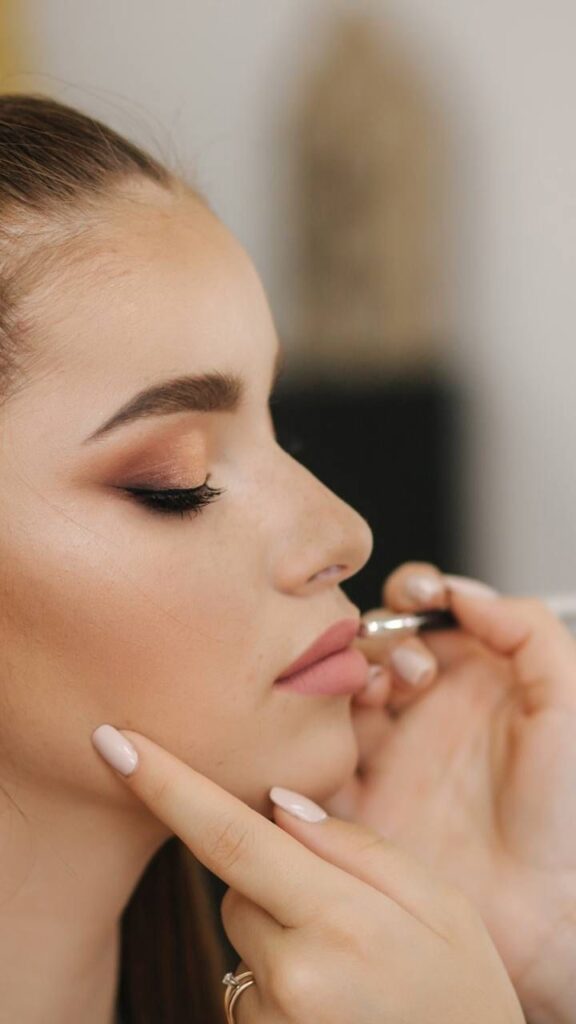
Your Touch-Up Kit: What to Have Available During the Day
Having the right products accessible during the day matters for moments between official touch-ups from your stylist or for the hours after the stylist’s engagement ends.
The Essentials Every Bride Should Have Accessible
At minimum, a wedding day touch-up kit should include: oil-blotting sheets, a blotting powder, the lip color used that morning (for reapplication), and a small makeup sponge or blending brush for any product that needs blending.
For outdoor summer weddings specifically, a travel-size setting spray is worth including. A quick spritz over touch-up work reactivates the moisture-resistance barrier over the areas where touch-ups were made.
What Your On-Site Stylist Brings vs. What You Should Have Nearby
A professional on-site concierge artist brings a full kit that includes every product used in the original application, plus tools for both touch-up and emergency fixes. They carry options for every contingency.
A bridesmaid’s emergency kit should not be confused for professional touch-up capability. The difference matters most in the quality of the result, particularly later in the evening when more significant refreshing may be needed before the reception entrance.
Who Should Be in Charge of Touch-Ups If You Don’t Have an All-Day Stylist
If your artist’s engagement ends after morning prep, designate someone in advance for touch-up responsibility. Give them the kit, walk them through the blot-first-then-assess protocol, and make sure they know what not to touch. Undesignated touch-up responsibility usually means nobody does it until something has gone noticeably wrong, which is harder to fix than something addressed early.
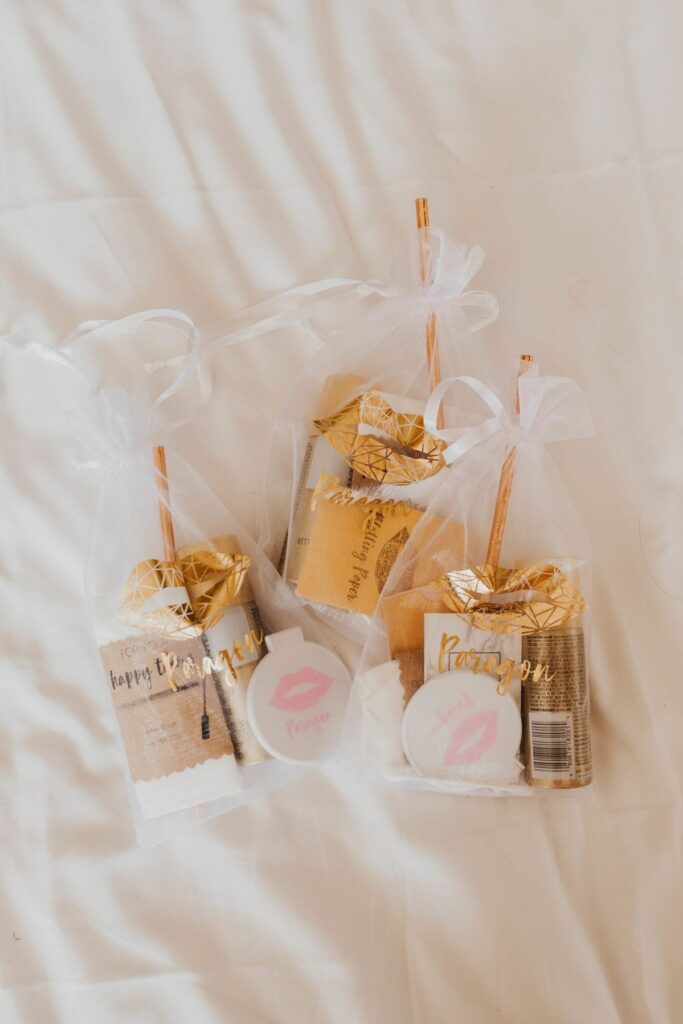
How All-Day Concierge Service Solves the Longevity Problem
The most reliable solution to makeup longevity on a Florida wedding day isn’t a product. It’s having a professional artist on-site through the day who built the look and knows how to maintain it.
What On-Site Touch-Ups Actually Look Like
An all-day concierge artist is present through the ceremony, available during the portrait session window, and on-site through the reception entrance. They monitor how the look is performing in real conditions, address any breakdown as it happens rather than after the fact, and manage the ceremony-to-reception transition that often includes the second look.
The Difference Between a Bridesmaid Doing Touch-Ups and a Professional
A professional on-site artist knows exactly which products were applied, in what sequence, and how to refresh that specific look without layering over it incorrectly. They bring the right tools, work efficiently, and produce a result that photographs consistently with how the look appeared at the ceremony.
Bridesmaid touch-ups, applied with the best intentions, often layer the wrong products or blend in ways that look different from the original application. This is most visible in reception photography.
For more on what all-day service includes and how it works, the all-day bridal beauty concierge guide covers it in full.
What an All-Day Artist Carries vs. a Basic Emergency Kit
An all-day artist carries everything used in the original application plus contingency products: different setting spray formulas, additional primer, powders in multiple textures, color-matched concealers, and the full eye and lip product range. They can re-create anything that needs re-creating, not just layer over what’s there.
Specific Scenario Guidance
The right approach shifts slightly depending on exactly what your ceremony conditions look like.
Outdoor Ceremony in Peak Summer Heat
Maximum heat resistance from every layer. Silicone-based primer, long-wear or airbrush foundation, strategic powder placement, waterproof eye and lip products, two passes of setting spray. Full waterproof makeup across all categories. Plan for on-site touch-up access during the portrait session.
Outdoor Ceremony in the Shade or Overcast Conditions
Shade reduces the direct heat and UV load but doesn’t eliminate the ambient humidity. The same product stack applies. The main difference is that makeup has slightly more forgiveness in terms of breakdown rate, so the timing pressure on touch-ups is less acute.
Moving Between Outdoor and Indoor Air-Conditioned Spaces
This is actually one of the more challenging scenarios. Moving from 90-degree outdoor humidity into 72-degree air conditioning creates condensation on the makeup surface as the skin adjusts to the temperature change. A light blot with oil-blotting sheets during the transition helps manage this.
The reception touch-up is particularly important for brides who spend the cocktail hour outdoors and enter an air-conditioned reception space, because the transition changes what the makeup’s surface looks like.
Beach or Waterfront Wedding
Salt air adds a layer of texture and moisture to the environment beyond standard heat and humidity. Setting spray is particularly important here. The light breeze typical of waterfront venues continuously delivers ambient moisture to the face, which means the moisture-resistance barrier needs to be as strong as possible.
Pre-Wedding Test Run
The trial isn’t just a preview. It’s a test. And to test effectively, it needs to replicate the conditions you’ll actually face.
Why Testing Your Bridal Look in Similar Conditions Matters
A trial done in an air-conditioned salon tells you how the makeup looks when it’s first applied. It doesn’t tell you how it performs after three hours in outdoor humidity. If your ceremony is outdoors in summer, find ways to test the look in similar conditions during the trial window: step outside, spend time in the heat, take photographs in natural light rather than only salon light.
What to Pay Attention to After Your Trial
Photograph the look at hour one, hour two, and hour four. Look at the images honestly. Where is there breakdown? Where is there shine? What changed between the first photograph and the last? This information gives your artist specific adjustment points before the wedding day, so the product stack can be refined based on how your skin actually responds.
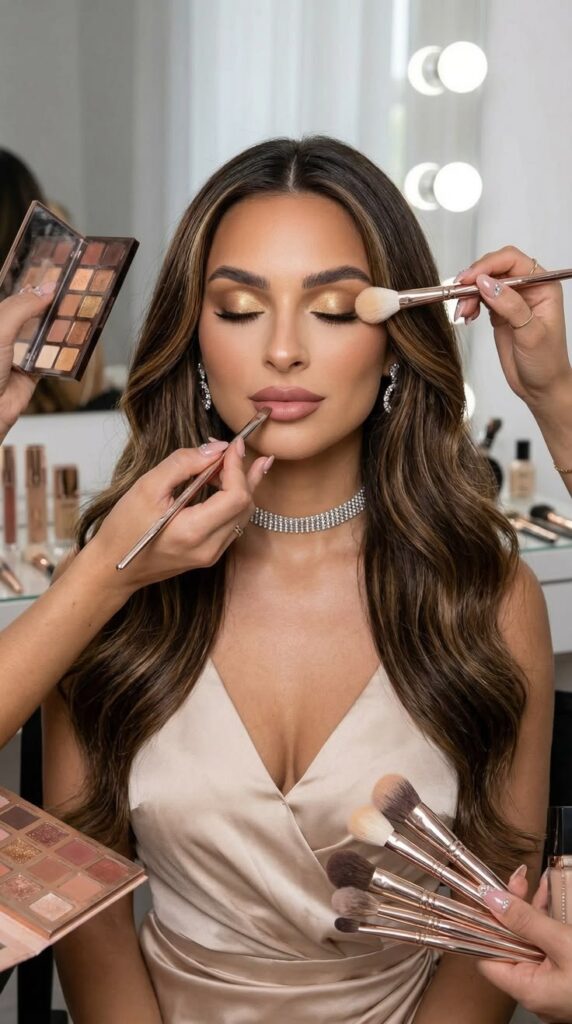
Frequently Asked Questions
How do you make bridal makeup last all day in Florida heat?
The foundation is a specific product layering system: a silicone-based primer that grips the skin, a long-wear or airbrush foundation applied in thin layers, strategic setting powder on oil-prone areas, waterproof eye and lip products, and a setting spray applied in two passes at the end. Every step is chosen for how it performs in heat and humidity, not just indoors.
What primer is best for bridal makeup in humidity?
Silicone-based primers and mattifying formulas with grip-enhancing properties perform best in humid conditions. They create a barrier between the skin and foundation that prevents slipping and extends wear time. Avoid oil-based primers or heavy hydrating formulas that add moisture when the climate is already providing it in excess.
Does airbrush makeup last longer in Florida heat?
Silicone-based airbrush foundation generally holds better in heat and humidity than most traditional liquid formulas. Its thin-layer bonding method resists moisture breakdown more effectively. However, a professional traditional application using the right primer, long-wear foundation, and setting spray can approach comparable longevity. The trial is the best place to determine what works best for your specific skin.
What should I avoid putting on my skin the morning of the wedding?
Avoid heavy moisturizers immediately before makeup, oil-based SPF that conflicts with primer adhesion, and any serum or treatment with a slippery base that reduces foundation grip. A light, non-oil moisturizer applied 20 to 30 minutes before makeup, or nothing at all for oily skin types, gives the primer the clean surface it needs to work properly.
How do you touch up bridal makeup during the wedding without ruining it?
Blot with an oil-blotting sheet first, before adding any product. This removes excess oil and surface shine without disturbing the underlying layer. Then, if needed, apply a light press of blotting powder. Avoid applying fresh liquid foundation over makeup that’s been worn for hours; it layers unevenly and reads as cakey in photographs.
What’s the difference between a bride doing her own touch-ups and having an all-day stylist?
A professional on-site stylist carries a full kit, knows exactly how the original look was built, and can refresh it using the same products and techniques. Self-administered touch-ups often layer incorrectly without addressing the underlying cause. The result looks different in photos. An all-day concierge stylist ensures the look holds through the full day with consistent quality.
Ready to Talk to the Phairis Luxury Team?
Rebecca Mousseau and the Phairis Luxury team have been building heat-resistant, humidity-proof bridal makeup for South Florida weddings for 18+ years. Every product choice and application decision is based on what actually holds in these conditions, tested across hundreds of real weddings at outdoor estates, waterfront venues, and beachfront properties across the region.
If you’re ready to start the conversation about your date and your venue, reach out here.
For more on planning your wedding day beauty:
To be iconic?
Ready
I'm excited to hear all about your wedding/Event day. Have a question about a booking and hair styling sessions? View our services and talk to us, also dont forget to check our portfolio
