
Airbrush vs Traditional Bridal Makeup: The Complete Comparison Guide

Airbrush and traditional bridal makeup can both create beautiful wedding-day results. Airbrush tends to offer lightweight, even coverage, while traditional makeup provides more flexibility for different skin types and coverage needs. The better choice depends on your skin, wedding conditions, and desired finish.
When brides start researching bridal makeup options, the airbrush question almost always comes up. Is it worth it? Does it actually last longer? Is it better for photos? And why does everyone seem to have a different answer?
The truth is that airbrush isn’t the automatic upgrade it’s often sold as. In our experience, traditional makeup is the better choice for most brides: it blends seamlessly, it can be adjusted and rebuilt throughout the day, and it lets the artist create the exact look and tint your skin needs. Airbrush still has a place for specific skin types and conditions, but after being the trend for the past five to eight years, many experienced artists are moving back to traditional application precisely for its versatility and creative range. Which is right for you depends on your skin type, your venue conditions, your desired finish, and what an experienced artist sees on your skin.
This guide gives you a complete, honest comparison: how each method works, how they perform across the factors that actually matter for weddings, and a framework for making the decision that’s right for you.
What Airbrush Makeup Actually Is
Airbrush makeup uses a small compressor and handheld tool to atomize foundation into a fine mist, which is then applied to the skin in thin, even layers. The foundation is sprayed rather than brushed or blended, which creates a different kind of coverage: seamless, thin, and almost invisible up close. However for mature clients, they find airbrushes tend to sit in creases more.
The Tool and the Product
The airbrush gun is a precision instrument. The spray width, pressure, and distance from the skin all affect the coverage and finish. A trained artist controls these variables continuously throughout the application, building coverage in layers rather than applying a single product pass.
The foundation itself is typically silicone-based or water-based, and the distinction matters.
Silicone-based formulas are the most common in professional bridal airbrush application. They’re sweat-resistant, humidity-resistant, and bond to skin in a way that creates exceptional longevity. They’re not water-soluble, which is why removal requires an oil-based cleanser or specifically formulated remover. They create a slightly dewy, luminous finish that photographs beautifully.
Water-based airbrush formulas are lighter and easier to remove. They’re more breathable on the skin and a better choice for certain sensitive skin types. They don’t quite match the longevity of silicone-based options in warm, humid conditions, but they perform respectably.
How Layering Creates the Finish
The airbrush finish that brides often describe as “skin-like” or “airbrushed” (beyond just the name) comes from the layering process. Instead of one application of a moderately concentrated formula, airbrush builds coverage through multiple passes of a diluted product. The result is thin coverage that sits on top of the skin rather than settling into pores or fine lines.
This is why airbrush photographs the way it does. There’s no visible texture, no brush streaks, no lines at the jaw. When light hits an airbrushed face, it reflects evenly. That’s an enormous advantage in both photography and in person.
What It Feels Like to Wear
Most brides who experience airbrush for the first time say they can barely feel it. It’s genuinely lightweight and doesn’t feel like you’re wearing anything. This is especially significant for brides who don’t typically wear heavy foundation and are concerned about that “cakey” feeling that sometimes comes with wedding day coverage requirements.
One caveat from the chair, though: because airbrush sits in fine, fast-drying layers on the surface of the skin, many brides find it feels drying as the day goes on. On skin that drinks it in, it can actually start to look powdery or cakey by the evening — the opposite of what most brides expect. Traditional formulas can be chosen with more hydration and refreshed with a hydrating mist through the day, which most brides find more comfortable over a long wedding day.
What Traditional Makeup Is (And Why It’s Not “Basic”)
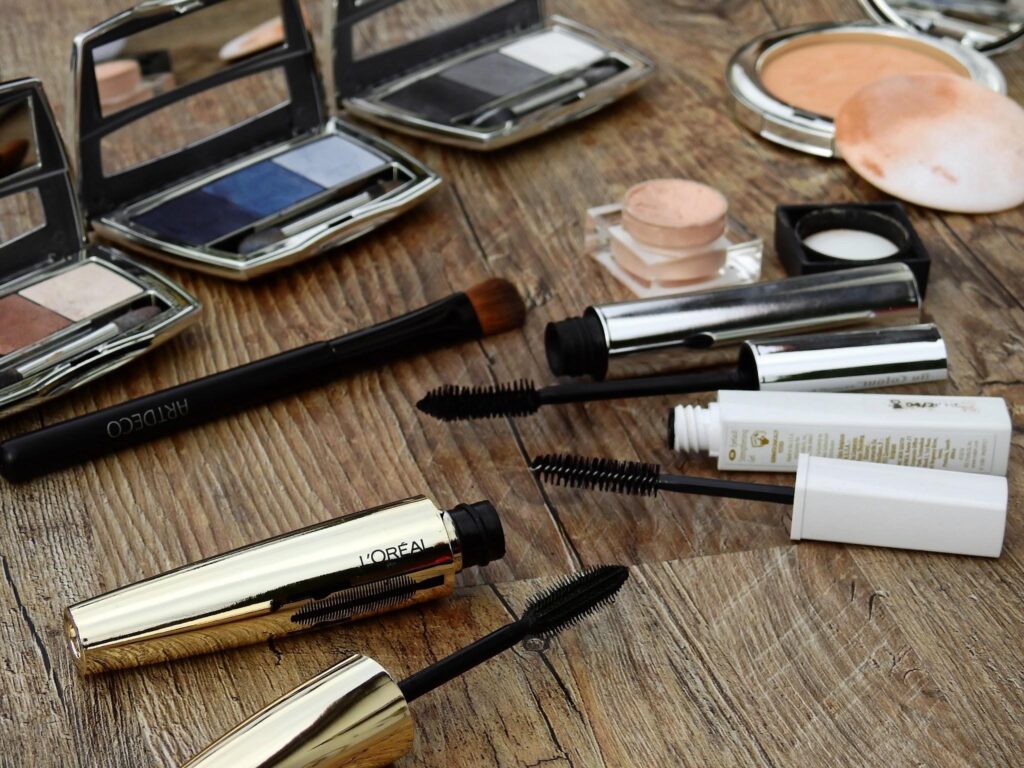
Traditional makeup refers to any application that uses brushes, sponges, and fingers to apply cream, liquid, or powder products. It’s the method that professional makeup artists have used for decades, and in the right hands, it produces results that are every bit as beautiful as airbrush — with more room to blend, adjust, and get creative. After airbrush’s popularity over the past five to eight years, many experienced bridal artists are returning to traditional application for exactly that reason.
The word “traditional” sometimes implies inferior, which is inaccurate. Professional traditional application uses a far wider range of products and techniques than home makeup application, and the results are categorically different. Traditional makeup is where your makeup artist’s techniques and skill shine.
Brush and Sponge Application
A professional traditional application typically begins with a primer applied by fingertip or brush, followed by a liquid or cream foundation worked in with a damp beauty sponge, a foundation brush, or both. The technique varies by artist, by product, and by the skin type of the client.
What makes professional application different from what most people do at home is product selection, skin prep knowledge, and technique precision. A skilled traditional makeup artist knows exactly how to build coverage without it reading as heavy, how to blend edges seamlessly, and how to layer products in a sequence that extends wear.
The Range of Traditional Products
Traditional makeup encompasses an enormous variety of product types: matte liquids, satin finishes, dewy formulas, buildable skin tints, full-coverage creams. Each has different properties for different skin types and desired outcomes.
This flexibility is one of traditional’s genuine advantages over airbrush. A traditional artist can reach for a different product based on what your skin needs in that moment. They can mix formulas, layer strategically, and adapt in ways that airbrush doesn’t allow.
Finish Comparison: How Each Looks On and Off Camera
Airbrush Finish
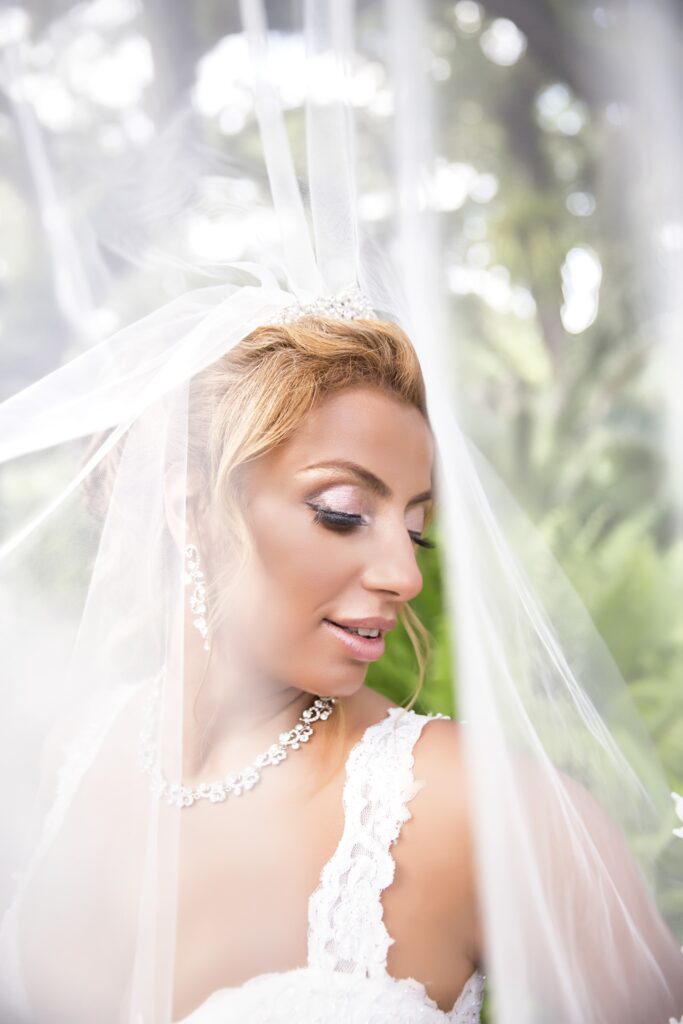
The signature airbrush finish is seamless and skin-like. Coverage reads as natural even when it’s substantial, because the thin layers don’t accumulate the visual weight that a single heavier application creates. Texture and pores are minimized without looking masked.
In photographs, especially in close-up and high-resolution images, airbrush tends to produce a very clean result. Skin looks like skin, not like skin under makeup. In even lighting (outdoor shade, diffused studio light, candlelight), the effect can be extraordinary.
Traditional Finish
Professional traditional application offers a broader range of finishes than airbrush. A matte traditional foundation looks and photographs differently from a satin formula, which looks different from a dewy skin-tint finish. The artist chooses based on what you need.
This versatility is a real advantage in creative hands. A traditional artist can create a sculpted, dimensional finish with depth and shadow that flat airbrush coverage doesn’t always replicate as effectively. For editorial-style photography or brides who want their makeup to feel expressive rather than neutral, traditional often delivers better results.
Camera Performance
In harsh, direct flash photography, airbrush typically performs consistently. Its thin, even layers don’t pick up texture or inconsistency the way thicker traditional formulas sometimes can.
In natural light photography, which has become the dominant style in modern wedding photography, both methods can be extraordinary. The key variable is less the application method and more the product choice and finish level. A dewy traditional finish in golden hour light can be as beautiful as anything airbrush produces.
The honest answer is that both methods, in professional hands, photograph beautifully. The differences are subtle and are better evaluated by testing both at your trial than by assuming one is categorically superior.
Longevity Comparison
Standard Wear
Under normal indoor conditions (air conditioning, moderate temperature, standard activity), both professional airbrush and professional traditional application hold comparably well. A properly set traditional application with a quality primer and setting spray performs nearly identically to airbrush in a controlled environment.
Under Wedding Day Conditions
Wedding day conditions are not controlled. Crying during vows is expected. Walking between air-conditioned venues and outdoor spaces happens repeatedly. Dancing for several hours creates heat and movement. Hugging hundreds of people applies friction. These are the conditions that separate application methods.
Silicone-based airbrush has a measurable advantage in resistance to sweat and humidity. The formula bonds to skin in a way that resists moisture breakdown more effectively than most liquid foundation formulas. Under outdoor summer conditions, it tends to hold longer before requiring a touch-up.
That said, a traditional application using waterproof primer, long-wear liquid foundation, and a quality setting spray can close this gap considerably. The difference is real but not categorical. An experienced artist using the right traditional products for the conditions will produce a result that holds very well through a standard wedding day.
Crying and Touch-ups
Airbrush foundation is significantly more resistant to cry-related breakdown than most traditional foundations. This is one of its clearest practical advantages for brides who know they’re emotional and anticipate tears at the ceremony. Silicone-based coverage resists the kind of streaking and creasing that happens when liquid foundation meets moisture.
There’s an important flip side, though. If airbrush does need a touch-up — after tears, sweat, or a long humid day — it’s very difficult to blend a correction into an already-airbrushed base, because the finish is set and can’t be reworked. Traditional makeup can be seamlessly touched up and re-blended all day long; airbrush largely can’t. Across a full day of crying, hugging, dancing, and Florida humidity, that adjustability is one of traditional’s biggest practical advantages.
Climate Performance: The Factor That Changes the Calculus
South Florida weddings present specific conditions that affect this comparison more than almost any other variable: heat, humidity, and often outdoor ceremonies that expose the bride to both.
How Airbrush Performs in Heat and Humidity
Silicone-based airbrush holds extremely well in heat and humidity. Because the coverage sits on top of the skin in thin layers and resists water-based moisture, it doesn’t break down the way traditional liquid foundations can when sweat and humidity begin to build.
For outdoor ceremonies in warm conditions, particularly for brides with oily or combination skin who are prone to shine and foundation breakdown, airbrush is genuinely the stronger choice.
How Traditional Can Be Engineered for Climate
An experienced bridal artist who regularly works at outdoor events in this climate knows how to engineer a traditional application for maximum hold. That means a silicone-based primer, a long-wear foundation formula, strategic powder placement, and a setting spray with grip and waterproofing. Done well, this approaches airbrush longevity.
But it requires an artist who knows how to build this stack correctly. It’s not what a first-time bridal artist or a salon that doesn’t specialize in weddings is doing.
The Verdict for Warm-Weather Outdoor Ceremonies
For brides with oily to combination skin having outdoor ceremonies in heat and humidity, airbrush or a hybrid approach gives the best performance. For brides with dry or mature skin having the same ceremony, a traditional approach is often better, for reasons we’ll cover in the skin type section.
Skin Type Suitability
This is where the airbrush-is-better assumption breaks down most significantly. Airbrush is better for some skin types and worse for others.
Oily Skin
Airbrush wins here. The thin layers create a finish that doesn’t amplify oil production the way some heavier traditional formulas can. Combined with the humidity resistance of silicone-based formulas, oily skin brides tend to hold their look longer with airbrush than traditional under similar conditions.
Dry Skin
Traditional is often the better choice for dry skin. Dry skin needs moisture-rich, nourishing formulas that airbrush products rarely are. A traditional artist can use hydrating primers and skin-tint-style foundations that add luminosity and moisture. Airbrush on dry skin can create a finish that looks flat, slightly powdery, or emphasizes any flakiness or rough texture.
Combination Skin
Both methods work. The decision usually comes down to where the oiliness is concentrated and what the desired finish is. A hybrid approach (airbrush on the center panel where shine is most likely, traditional for blush and contour) often works best.
Mature Skin
This is the category where the airbrush-is-better assumption does the most damage. Mature skin often has fine lines, especially around the eyes and mouth, where airbrush coverage can settle and accumulate in ways that emphasize rather than minimize.
A traditional application using a hydrating primer, a skin-tint or light-coverage foundation, and strategic placement of powder (sparingly, or not at all) tends to look far more flattering on mature skin. The dimensional layering that a brush allows produces more natural results than the flat, uniform coverage of airbrush.
Acneic or Sensitized Skin
Both methods can work, but product selection is critical. Silicone-based airbrush can be problematic for acne-prone skin if the product doesn’t agree with the skin. Water-based airbrush is a better option here. Traditional application with non-comedogenic products is also appropriate.
If a bride has active acne or sensitized skin, the trial conversation with the artist about product ingredients is essential before any commitment is made.
Cost Difference
Airbrush application typically carries a service upcharge, usually in the range of $25 to $75 per person over standard pricing. The upcharge reflects the equipment investment the artist has made, the additional technique required, and the slightly longer application time.
Is the upcharge worth it? The honest answer is: it depends on what you actually need.
For an oily-skin bride having an outdoor summer ceremony in a warm, humid climate, the additional cost for airbrush is very likely worth it. For a dry-skin bride having an air-conditioned indoor ceremony, traditional application with the right products often delivers equal longevity for less.
The trial is the right place to make this evaluation. Let your artist do both (or one and then discuss the tradeoff), and decide based on what you actually see on your skin rather than on an assumption.
Application Time Comparison
Airbrush typically takes ten to fifteen minutes longer per person than a traditional application of equivalent coverage. The layering process requires more passes and more time between layers.
For a large bridal party, this adds up. If you have eight people needing makeup and you’re upgrading everyone to airbrush, you’re adding roughly an hour and twenty minutes to the morning timeline.
This doesn’t mean don’t do it. It means account for it when building your timeline, and discuss it with your artist before the morning so the schedule reflects reality.
The Hybrid Approach: Getting the Best of Both
Many experienced bridal artists use a combination of both methods rather than a strict airbrush-only or traditional-only application. This is often the most effective approach.
A common hybrid is: airbrush foundation on the full face for base coverage (seamless, humidity-resistant), followed by traditional application for blush, bronzer, highlight, contour, and eye shadow (allowing for the blending, dimension, and precision that brushes provide).
The result combines the longevity and seamless finish of airbrush coverage with the expressive layering that traditional products allow. For brides who want great hold but also a look with depth and personality, the hybrid often outperforms either method alone.
How to Decide: A Framework for Every Bride
For most brides — especially anyone who wants a blendable, adjustable, creative look that can be refreshed all day — our default recommendation is traditional or a hybrid. That said, before your trial it helps to ask yourself four questions:
What is my skin type? Oily or combination: airbrush or hybrid. Dry or mature: traditional or hybrid. Normal: either works, decide on finish preference.
What are my ceremony conditions? Outdoor, warm, or humid: lean toward airbrush. Indoor, air-conditioned, controlled: either works comparably.
What finish do I want? Seamless and skin-like: airbrush. Dimensional and expressive: traditional or hybrid.
What does my artist recommend after seeing my skin? This is the most important question. A skilled bridal artist has seen what works on hundreds of different skin types in different conditions. Their recommendation, made in the context of your actual skin, is more reliable than any general guideline.
The trial is the real deciding factor. If you have the opportunity to test airbrush on one half of your face and traditional on the other, take it. Look at the photographs side by side. See what your skin actually does with each method. That information is worth more than everything else in this guide.
Frequently Asked Questions
Is airbrush makeup better than traditional for weddings?
For most brides, no — we recommend traditional or a hybrid. Traditional blends seamlessly, can be adjusted and refreshed all day, and lets the artist craft the exact tint and finish your skin needs. Airbrush still suits specific cases — oily skin, hot humid outdoor ceremonies, and brides who want the most seamless possible base — but it can’t be re-blended once it’s on, and it can feel drying or look cakey over a long day.
Does airbrush makeup last longer?
Silicone-based airbrush tends to hold better in heat and humidity, and resist cry-related breakdown more effectively. In controlled indoor conditions, both methods perform comparably when applied professionally.
What skin types is airbrush best for?
Oily to combination skin benefits most from airbrush in warm or humid conditions. Dry and mature skin usually performs better with traditional or hybrid application.
How much more does an airbrush cost?
Typically $25 to $75 per person as an upcharge. Whether it’s worth it depends on your skin type and wedding conditions.
Can airbrush and traditional makeup be combined?
Yes, and this hybrid approach is often the most effective solution. Airbrush for base coverage, traditional products for blush, contour, highlight, and eye work, gives you the longevity of airbrush where it matters with the flexibility of traditional products everywhere else.
How do I know which is right for me?
Test it at your trial. Have your artist apply airbrush or discuss a hybrid, photograph yourself in different lighting, and wear the look through the afternoon. What your skin actually does with the method is more informative than any general recommendation.
Talk to Phairis Luxury About Your Makeup Approach
Rebecca MousseauRebecca Mousseau and the Phairis Luxury team offer both airbrush and traditional application, as well as hybrid approaches tailored to each bride’s skin type, venue conditions, and aesthetic goals. For most brides, though, Rebecca recommends traditional or a hybrid — for its blendability, its all-day adjustability, and the creative control it gives her to build the exact look you want.
The trial is where these decisions are made properly, with real information about your skin rather than guesswork. Reach out to check availability for your wedding date and start the conversation.
For more on bridal makeup and beauty planning:
To be iconic?
Ready
I'm excited to hear all about your wedding/Event day. Have a question about a booking and hair styling sessions? View our services and talk to us, also dont forget to check our portfolio
