
How to Choose a Wedding Hair and Makeup Artist in Florida

Choosing a wedding hair and makeup artist in Florida comes down to three things: which of the state’s four regions your venue sits in, how that region’s humidity and heat will behave on your date, and whether the artist’s travel radius genuinely covers you. Peak season in South Florida books 12 to 18 months out.
Florida gets treated as one wedding market. It isn’t. A beach ceremony in the Keys in July and a ballroom wedding in Palm Beach in February are different events with different beauty requirements, and the artist who excels at one may never have worked the other.
The searches reflect the confusion. Brides look for a “Florida wedding makeup artist” and get results spanning six hundred miles of coastline. This guide sorts that out: what actually differs by region, what the climate does to hair and makeup, how season dictates your booking window, and how to verify an artist before you commit.
Florida Is Four Bridal Beauty Markets, Not One
Palm Beach and the Treasure Coast
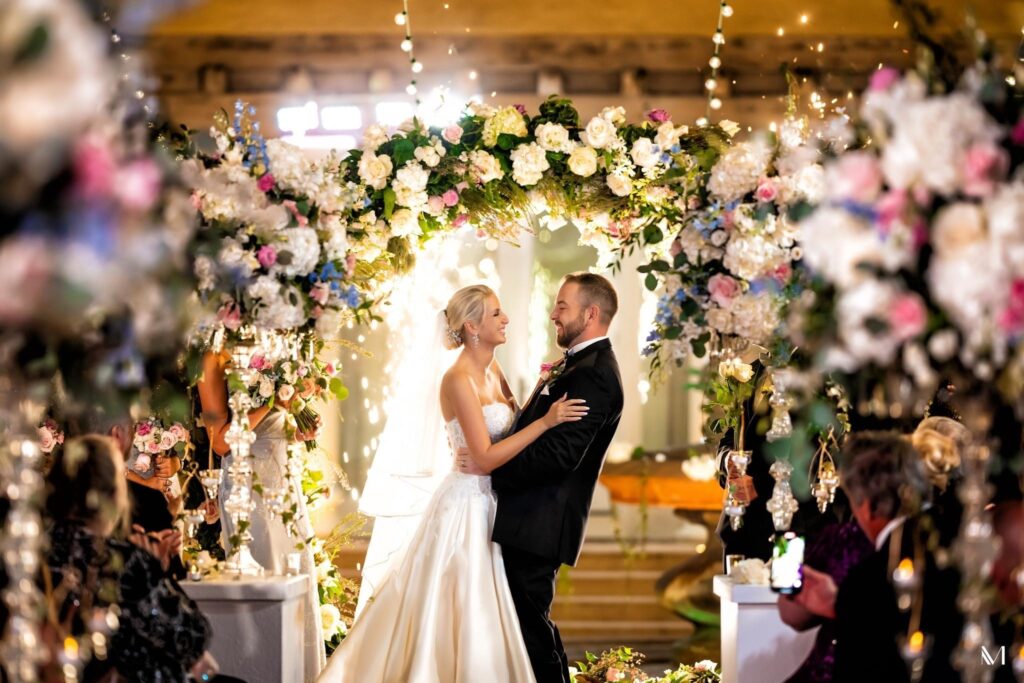
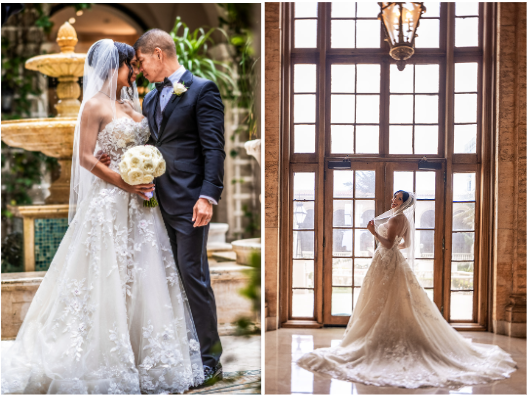
The state’s densest concentration of luxury wedding venues. Oceanfront resorts, private estates, historic clubs, and a set of properties — The Breakers, Four Seasons Palm Beach, The Colony Hotel, The Addison in Boca Raton — that operate to a standard most vendors have to grow into.
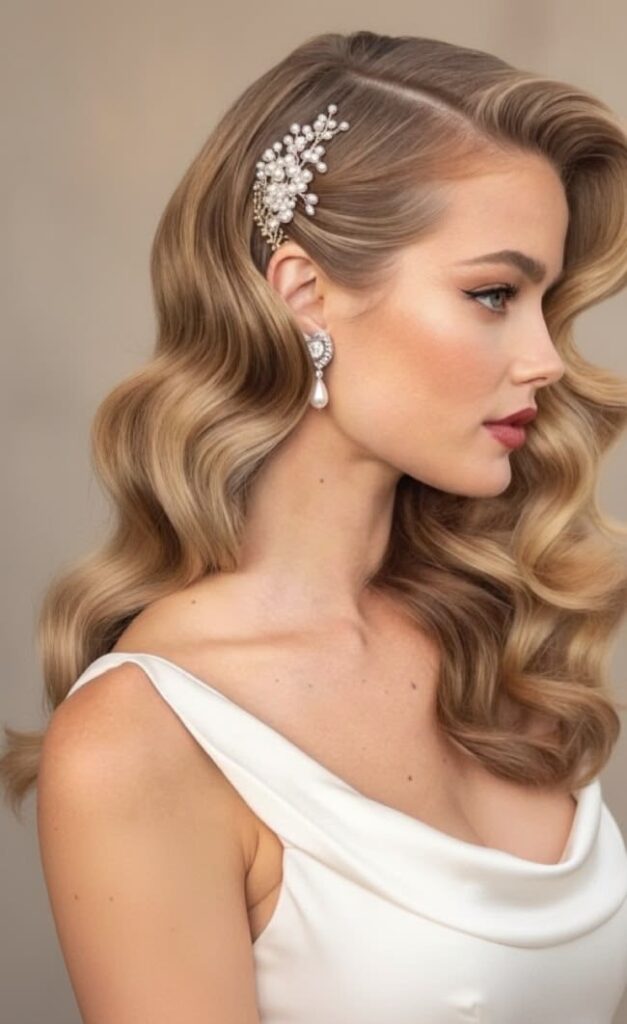
The prevailing aesthetic is classic: soft, timeless, heirloom. Hollywood waves, romantic updos, luminous skin rather than high contrast. Artists working here regularly tend to be strong on longevity and polish, because the properties expect a bride to look composed from a morning first look through to a late reception.
Vendor requirements are stricter here than elsewhere in the state. Certificates of insurance, vendor meals, arrival protocols — the paperwork is real, and an artist who works these properties handles it without being asked.
Miami and Fort Lauderdale
A different visual culture. Miami’s bridal work skews editorial and high-contrast — bolder eyes, sculpted skin, stronger lips. It is also the most multicultural wedding market in the state, which in practice means artists here are more likely to have deep experience across a wide range of skin tones and hair textures.
Venues range from beachfront hotels to historic properties like the Biltmore in Coral Gables to modern rooftops and museums. Timelines are often later — Miami receptions run long, which raises the value of an artist who stays for touch-ups.
If your aesthetic is soft and traditional, you can absolutely find it here. But look at portfolios carefully, because the default leans in another direction.
The Florida Keys
Small guest counts, large logistics. Keys weddings are often forty people rather than two hundred, but getting a beauty team to Key Largo, Islamorada, or Key West involves a long drive down a single highway with no alternate route, or a boat, or both.
Accommodation the night before is frequently necessary rather than optional. Call times shift accordingly. And the conditions are the most demanding in the state: salt air, constant wind off the water, and humidity that sits high year-round.
Styles that survive here are built for it — secured updos, hair that’s set rather than merely finished, and makeup layered for heat.
The Gulf Coast and Orlando
Naples, Sarasota, Tampa, and the resort corridor through Orlando. Gulf Coast weddings often centre on sunset ceremonies, and Orlando has a large volume of resort and destination-package weddings.
This is a genuinely separate market from South Florida. Most Palm Beach and Miami artists do not routinely cross the state, and when they do, travel and accommodation costs make it a considered decision rather than a casual one.
Quick Reference: Which Region Is Your Venue In?
| Region | Aesthetic default | Conditions | Booking lead time (peak) |
| Palm Beach / Treasure Coast | Classic, soft, heirloom | High humidity, strict venue protocols | 12–18 months |
| Miami / Fort Lauderdale | Editorial, high contrast | High humidity, late timelines | 12–18 months |
| Florida Keys | Relaxed, wind-proof | Salt air, constant wind, year-round humidity | 12–18 months + travel planning |
| Gulf Coast / Orlando | Varied, resort-driven | Humid, storm-prone summers | 9–15 months |
What Florida’s Climate Changes About Your Beauty Plan
Humidity and What It Does to Hair Over Eight Hours
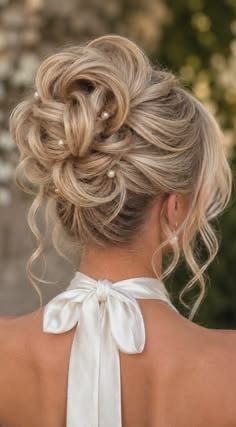
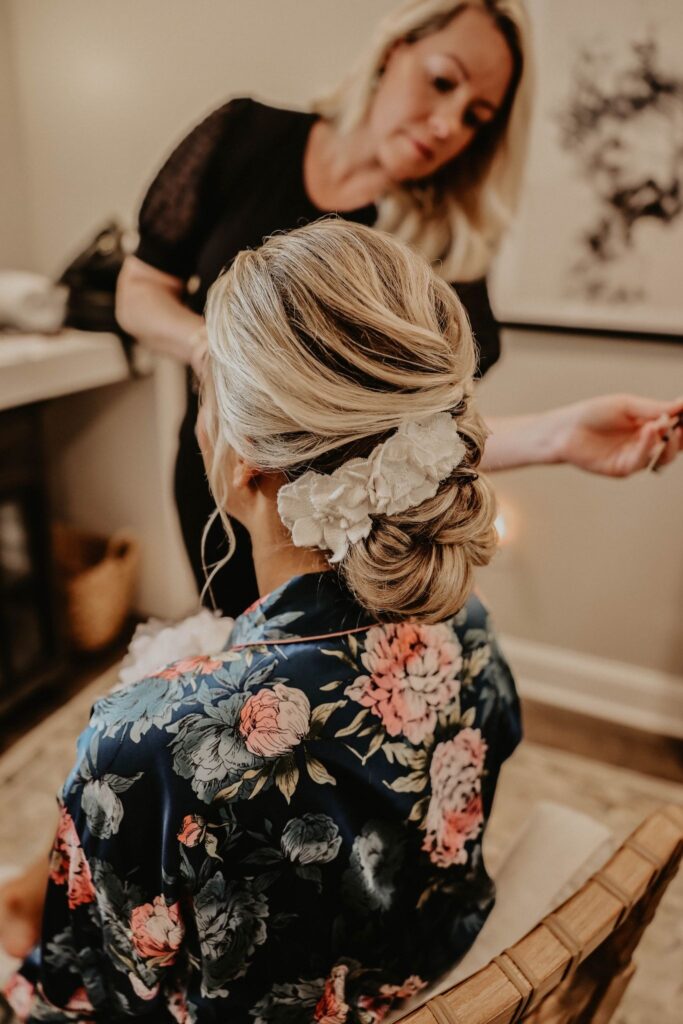
Humidity draws moisture into the hair shaft. Hair swells, the cuticle lifts, and curl definition softens — smooth styles gain frizz, defined curls lose their shape. It doesn’t happen at once; it happens over hours, which is why a style can look flawless in photographs at noon and tired by the time you’re seated at dinner.
The countermeasure is structural, not cosmetic. Styles built for Florida are set properly rather than merely finished, secured with more pins than a dry-climate equivalent would need, and sealed with products chosen for humidity resistance. An artist who works here constantly builds for this by default.
It’s also why loose, unsecured styles carry more risk at Florida weddings than brides expect. They’re achievable — but they need to be built with the day’s conditions in mind.
Heat, Sweat, and Why Product Layering Matters More Here
Makeup fails in heat when it’s applied as one heavy layer. Thin, deliberately layered application — skin prep, primer matched to skin type and conditions, base built in passes, setting between steps — holds far better than a single application of a long-wear foundation.
Brides often assume airbrush is the humidity-proof option. It is more complicated than that, and it’s the question worth raising with any Florida artist you’re considering — our airbrush vs. traditional bridal makeup comparison covers where each holds up in this climate.
Our guide to making bridal makeup last in Florida heat goes deeper on products and technique.
Outdoor Ceremonies, Sea Breeze, and Holding Power
Coastal wind is a separate problem from humidity. It moves hair mechanically — pulling strands loose, lifting veils, undoing anything not properly anchored.
If your ceremony is on sand or an open terrace, tell your artist. It changes how the style is built: more secure anchoring, a veil placed to work with the wind rather than fight it, and often a style designed to look intentional when a few strands do come loose.
Afternoon Storms and the Indoor-Backup Question
Florida summers produce near-daily afternoon storms, most of them brief. Most outdoor weddings between June and October have an indoor backup plan.
The beauty implication is straightforward: your timeline needs enough flex that a thirty-minute delay or a venue change doesn’t leave anyone half-finished. Build the buffer, and make sure your team knows the backup plan exists.
Season Decides How Early You Must Book
Peak Season: November Through April
This is when Florida weddings happen. Comfortable temperatures, low rain, and an influx of out-of-state couples all concentrate demand into six months.
For a Saturday in that window at a well-known South Florida venue, twelve to eighteen months ahead is the realistic booking horizon for a sought-after artist. Popular dates go earlier. If you’ve booked your venue and your photographer, book your beauty team next — the good ones fill their calendars a year out.
Summer and Hurricane Season: June Through November
Availability improves substantially. Prices are often more flexible. Six to nine months is frequently enough.
The trade-off is contingency. Atlantic hurricane season runs June 1 through November 30, and while direct impacts on any given wedding are unlikely, the possibility should be reflected in your contract. Ask specifically how your artist handles postponement for weather — a good rescheduling clause is worth more than a discount.
Holiday Weekends and Double-Booking Risk
New Year’s Eve, Memorial Day weekend, Thanksgiving weekend, and the weeks around Christmas concentrate weddings into a handful of dates. That’s when artists are most likely to take two events in a day.
If your date is one of these, ask the question directly: are you booking anyone else on my date? A second wedding means someone is watching a clock while they finish your bridal party.
How the Trial Fits Your Timeline
Booking and the trial are different events. You book on portfolio, credentials, and consultation — often a year or more out. The trial happens eight to twelve weeks before the wedding.
That window matters. Earlier, and your hair length, colour, and skin condition may not match what they’ll be on the day. Later, and there isn’t time to refine anything.
For more on the window, see our guide to how early to book a bridal hair and makeup artist.
Coverage: Why a “Florida” Artist Is Really a Regional Artist
What a Travel Radius Actually Means
Almost no artist genuinely serves the whole state. What they have is a home base and a radius they work routinely — inside which travel is straightforward and priced simply, and outside which it becomes a bigger decision involving longer days, accommodation, and higher fees.
A Palm Beach–based artist typically covers Miami through the Treasure Coast without difficulty. A Tampa or Panhandle venue is a different conversation.
Ask where they’re based and how often they work your specific area. “We travel anywhere” is technically true of everyone and tells you nothing.
When Crossing Regions Makes Sense
Sometimes it’s clearly worth it: you have an existing relationship with an artist, or your look is specialised enough that regional expertise matters more than proximity, or your venue is remote enough that everyone is travelling regardless.
Often it isn’t. Paying for travel and accommodation to bring in an artist from three hours away, when equally strong artists work your venue every month, is money that could go elsewhere.
The genuine advantage of a local artist is knowledge: which suite at your venue has the best light, where to park, how long the drive takes at 6 a.m., what the vendor check-in process is. None of that appears in a portfolio, and all of it makes the morning easier.
Team Size vs. Guest Count
Count services, not people. Eight people needing hair and makeup is sixteen services — and services, divided by what a single artist gets through in an hour, is what determines your team size. It is arithmetic, and any artist quoting you a number should be willing to show their working.
Our bridal party planning guide walks through the calculation, and how many people a stylist can handle covers the ratios.
For travel fee structures, contracts, insurance, and the full list of questions worth asking a travelling artist, see our guide to vetting a mobile wedding hair and makeup artist.
How to Verify a Florida Wedding Hair and Makeup Artist
Venue Familiarity as a Credibility Signal
Ask whether they’ve worked your venue. It’s the fastest credibility check available, and the answer tells you more than a general experience claim.
An artist who has worked your property knows the getting-ready room, the light, the parking, the vendor protocol, and the drive time. An artist who hasn’t can absolutely still do excellent work — but they should say so honestly and explain how they prepare for an unfamiliar property. Be wary of vague implications of experience that aren’t quite claims.
Real-Wedding Portfolio vs. Studio Work
Ask for three complete real weddings, start to finish — not curated highlights.
Full galleries show consistency, range across skin tones and hair textures, and how the work photographs in real venue lighting rather than controlled studio conditions. A portfolio composed entirely of styled shoots and single close-ups is showing you the best five minutes of a career.
For Florida specifically, look for outdoor work and evening work. Ask whether the images were taken at the end of the night or at the start.
Licensing, Insurance, and Contracts
Cosmetology licences in Florida are publicly verifiable through the Department of Business and Professional Regulation.
General liability insurance matters more than brides expect. Many luxury venues require a certificate of insurance from every vendor before granting access — an artist who cannot produce one may be turned away at the door.
The contract should name your date, venue, and call time; every person receiving services; the number of artists; deposit and balance schedule; cancellation and rescheduling terms in both directions; travel fees; and a backup-artist provision.
Where to Cross-Check Reviews
The Knot, WeddingWire, Google, and Yelp each collect different reviewers. Look for volume and consistency over time rather than a perfect average, and read the detail — reviews that mention timing, communication, and how the team handled something going wrong are more useful than reviews that say the makeup was pretty.
What Actually Drives the Price in Florida
There is no single figure, and any guide that gives you one is guessing. What’s useful is knowing which variables move the number.
Headcount. The largest single driver. Every additional person is an additional service, and often an additional artist.
Region. Palm Beach and Miami sit at the higher end of the state’s range; other markets run lower.
Season. Peak-season Saturdays carry peak-season pricing.
Travel distance. Mileage, zone fees, parking, tolls, and accommodation for distant venues.
Duration of coverage. A morning appointment and an all-day presence with touch-ups and a second-look restyle are different services at different prices.
Add-ons. Extensions, second looks, and additional trials each add.
The productive question isn’t “what does this cost in Florida” — it’s “what does this cost for my headcount, at my venue, on my date, with the coverage I want.” Any artist can answer that precisely once you give them those four things.
How Phairis Luxury Approaches Florida Weddings
We’re based in Wellington and work across Palm Beach, Miami, Fort Lauderdale, Boca Raton, Jupiter, Delray Beach, Port St. Lucie, and the Keys — one region, worked deeply, rather than a claim to the whole state.
We book one event per day. On a peak-season Saturday, that’s a meaningful constraint on our own calendar and the reason nobody on our team is watching a clock against a second booking.
We stay all day — ceremony touch-ups, the window between ceremony and portraits, second-look transitions. In a climate where a style has to survive eight hours of humidity, that presence is worth more than it would be almost anywhere else.
Rebecca Mousseau has spent more than eighteen years on Florida weddings: 800+ brides, 5,000+ hairstyles, and a working knowledge of what this specific climate does to hair between a morning first look and a late reception. We work regularly at The Breakers, Four Seasons Palm Beach, The Addison, the Biltmore, and The Colony Hotel.
Frequently Asked Questions
Do wedding hair and makeup artists in Florida travel across the whole state?
Most work a regional radius rather than the full state. A Palm Beach–based artist routinely covers Miami through the Treasure Coast; Tampa or Panhandle venues usually mean a travel fee, overnight accommodation, or a locally based team instead.
How far in advance should I book a wedding hair and makeup artist in Florida?
For a November–April South Florida date, twelve to eighteen months ahead. Summer and early-fall dates are often available at six to nine months. Book the artist first, then schedule the trial eight to twelve weeks before the wedding.
Does Florida humidity ruin wedding hair and makeup?
It doesn’t have to. Humidity causes hair to swell and lose curl definition, and it breaks down makeup that isn’t layered and sealed for it. An artist who works Florida weddings regularly builds the look around those conditions from the start.
Is a Miami wedding makeup artist different from a Palm Beach one?
Often, yes — in aesthetic default. Miami skews editorial, high-contrast, and multicultural; Palm Beach skews classic, soft, and heirloom. Both are learnable, but portfolios tend to reveal which the artist does most.
How much does a wedding hair and makeup artist cost in Florida?
It varies too much for a single figure. The drivers are party size, region, season, travel distance, and whether the artist stays all day or leaves after the morning. Ask for a quote built on your actual headcount and timeline.
Do I need separate artists for hair and makeup at a Florida wedding?
For a bridal party of four or more, yes. Parallel hair and makeup stations are what keep the morning on schedule. Solo dual-skill artists work well for very small parties.
Ready to Learn More?
Once you’ve shortlisted artists, the questions that separate them are in our guide to vetting a mobile wedding hair and makeup artist — travel fees, team size, insurance, contracts, and backup cover.
When you’ve booked, on-site wedding hair and makeup walks through the wedding morning hour by hour.
For location-specific detail, see our pages for Palm Beach, Miami, and Key West.
To talk about your own date, check availability here, read more about Rebecca Mousseau, or browse the full wedding hair and makeup service overview.
To be iconic?
Ready
I'm excited to hear all about your wedding/Event day. Have a question about a booking and hair styling sessions? View our services and talk to us, also dont forget to check our portfolio
